
Beautiful Plants For Your Interior
Beautiful Plants For Your Interior
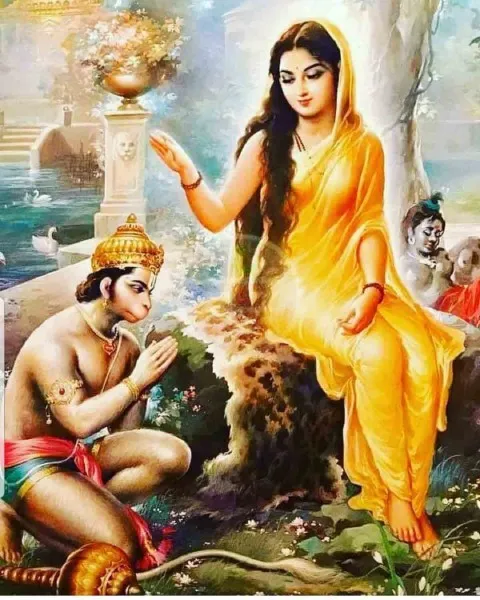
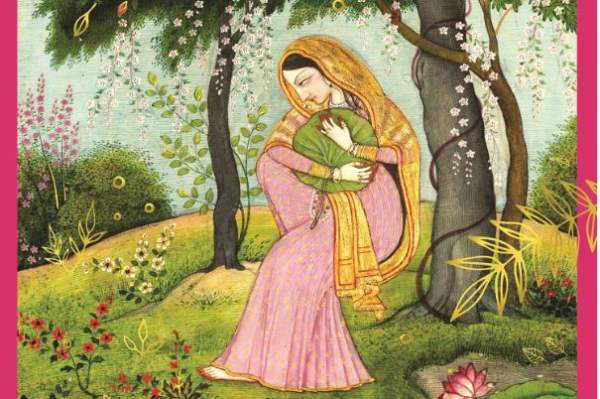
Sita is a Hindu goddess and the wife of Lord Rama, one of the most revered deities in Hinduism. She is known for her unwavering devotion, loyalty, and chastity, making her a symbol of feminine virtues in Hindu mythology.
According to the ancient Hindu epic, the Ramayana, Sita was born from the earth and was discovered by King Janaka, who raised her as his own daughter. She was renowned for her beauty and grace, and many suitors sought her hand in marriage. However, she chose Lord Rama as husband, who was the prince of Ayodhya and an incarnation of Lord Vishnu.
Sita’s life was full of trials and tribulations, and she faced many challenges with courage and fortitude. In one of the most famous episodes of th

e Ramayana, Sita was kidnapped by the demon king Ravana, who coveted her beauty and wanted to make her his queen. Despite her captivity, Sita remained steadfast in her devotion to Lord Rama and refused to be swayed by Ravana’s seductions. Eventually, Lord Rama rescued Sita from Ravana’s clutches and vanquished the demon king, symbolizing the victory of good over evil.
Throughout her life, Sita embodied the ideals of chastity and fidelity, which are highly valued in Hindu culture. Her devotion to Lord Rama was unwavering, and she remained faithful to him even in the face of great adversity. Her purity and virtue have made her a revered figure in Hindu mythology, and she is often held up as a role model for women, who are expected to emulate her qualities of loyalty, devotion, and selflessness.
However, some critics have argued that Sita’s portrayal in the Ramayana reinforces patriarchal norms and expectations of women. Her unwavering obedience to Lord Rama and her willingness to sacrifice herself for his sake have been criticized as perpetuating the idea that women are subordinate to men and should be self-sacrificing and submissive. Some feminist interpretations of the Ramayana have sought to reclaim Sita’s story as a tale of female empowerment, emphasizing her courage, intelligence, and agency in the face of male domination.
Regardless of one’s interpretation of Sita’s story, she remains a powerful symbol of feminine virtues and ideals in Hindu culture. Her unwavering devotion, loyalty, and chastity continue to inspire and resonate with many people, and her story continues to be retold and reinterpreted in various forms of art and literature.

